History blog4 May 2012
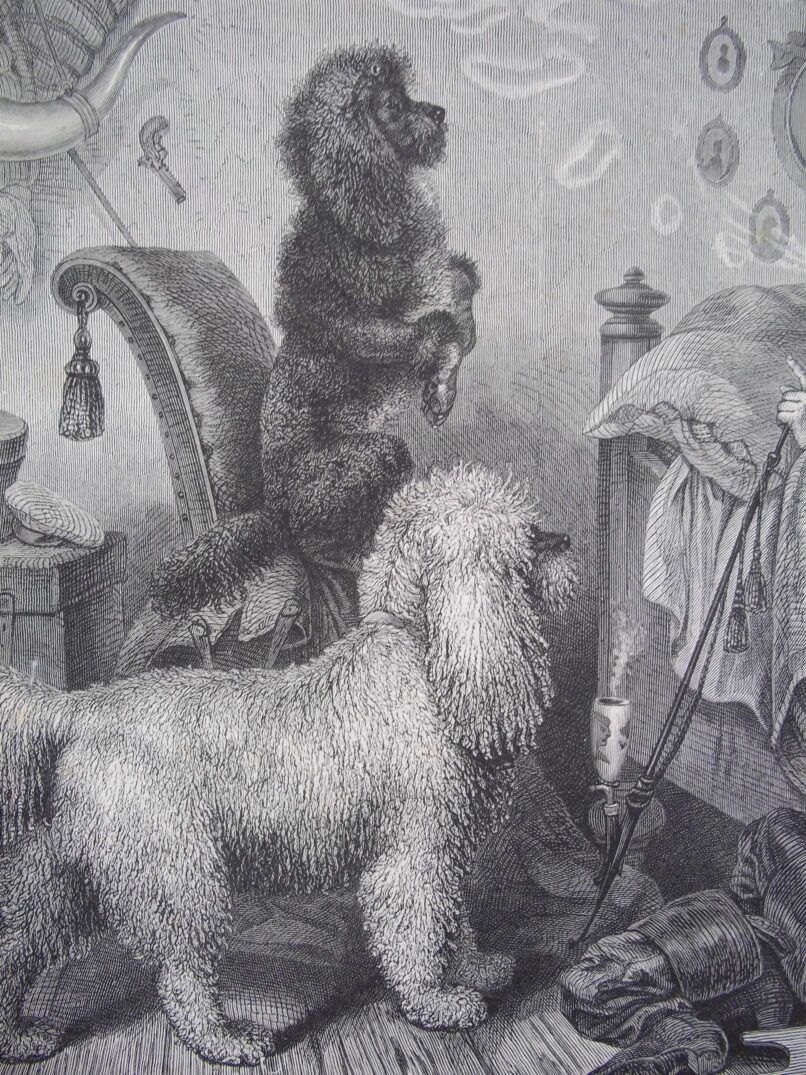
What we need from our companion animals has changed over the centuries, dogs are no longer solely hunting partners, and cats are more than ‘rat catchers’. We offer our pets shelter and food in exchange for companionship. A bond based on similar mutual benefits was the foundation of the first human-animal relationships.
The earliest domesticated animal was almost certainly the dog, with the West Asians and Egyptians taming their native wolves. Rock art in Western Iran places the domestication of the wolf some 12,000 years ago. Wolf cubs might have been tamed with raw meat or drawn to settlement’s discarded food; they were then trained to as guards, herders and hunters.
Evidence of feline domesticity was found in Khirokita, Cypress where human remains have been found buried alongside cats, dated to around 9000 years ago. It is thought that Ancient Egyptians and Mesopotamians kept cats to kill the vermin that would invade grain stores.
In Britain, animal care was rudimentary until the Romans invaded in AD 43. Along with superior technology, the Romans also brought better health care to our shores, and with that our first form of pet care. External surgery, wound care, even spaying and castration were practiced.
Dogs and cats were our very first pets but over time other animals have been domesticated. In the 19th century animal fancying emerged as a hobby which led to all sorts of animals, from chinchillas, to rabbits to birds, being kept as pets, bred and entered into shows.
Over the coming months we will bring you more on the history of the domesticated animal – you can look forward to pieces on rabbit keeping and breeding, bird fancying and more on man’s best friend, the dog
If you would like to read a more in depth history of pet care as carried out by veterinary surgeons, check out ‘A short history of British small animal practice’,by Bruce V. Jones, in Veterinary History, Vol. 15(2), 2010.
Read more history blogs
-
History blog
 26 August 2026
International Dog Day 2026
-
History blog
-
History blog
 8 June 2026
Open Farm Sunday