History blog26 August 2026
Today is International Dog Day, an initiative which began in 2004. Its aims include celebrating dogs around the world and raising awareness of good doggy welfare.
So, let’s take a brief walkies through some of our favourite canine images from the RCVS archive and historic book collections.
Border Collies
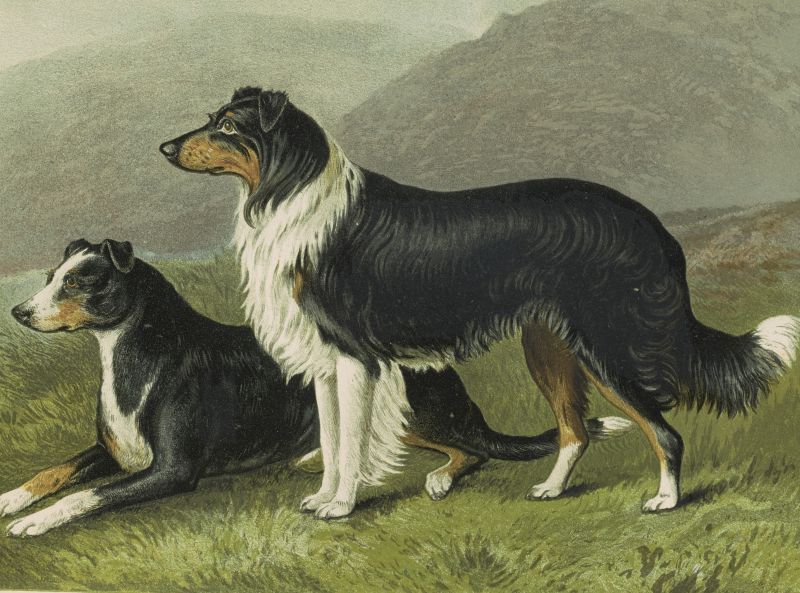
These smooth-coated and rough-coated border collie dogs come from the 1890 publication Cassell’s Illustrated Book of the Dog by Vero Shaw. They are apparently named Yarrow and Hornpipe respectively.
Shaw writes glowingly of the breed: “The sheep-dog holds a very high place among our domestic dogs, to which his great usefulness and high intelligence fully entitle him.”
Library reference: XXR 18906-1001
Youatt’s poodle
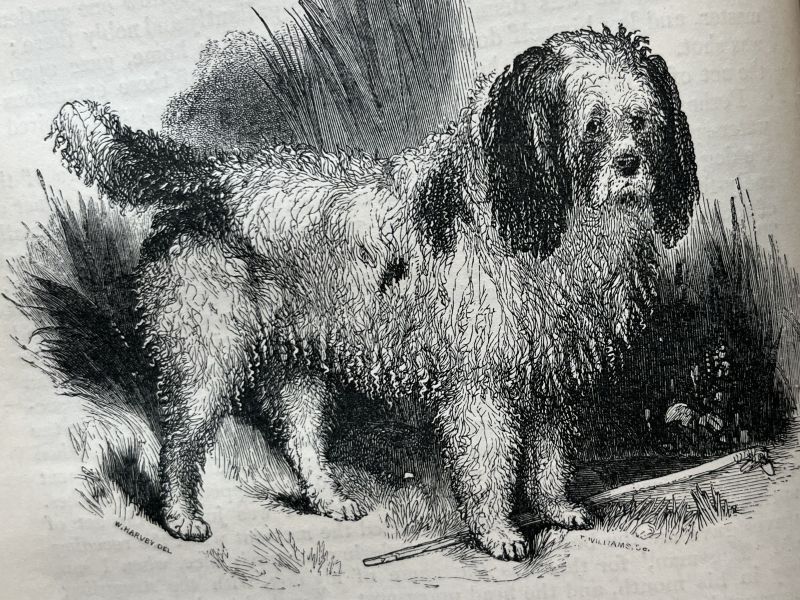
Though commonly associated with France, the poodle actually originates in Germany. The name is thought to be derived from the German word “Pudel”, meaning puddle or splash.
This innocent-looking example comes from The Dog by William Youatt, first published in 1845. Youatt was the son of a nonconformist minister and was expected to follow in his father’s footsteps. He instead joined a veterinary surgery in London’s Oxford Street and was known for his lectures, originally delivered from his residence / infirmary in Bloomsbury.
Library reference: XXR 15169-1001
Skilled salutri
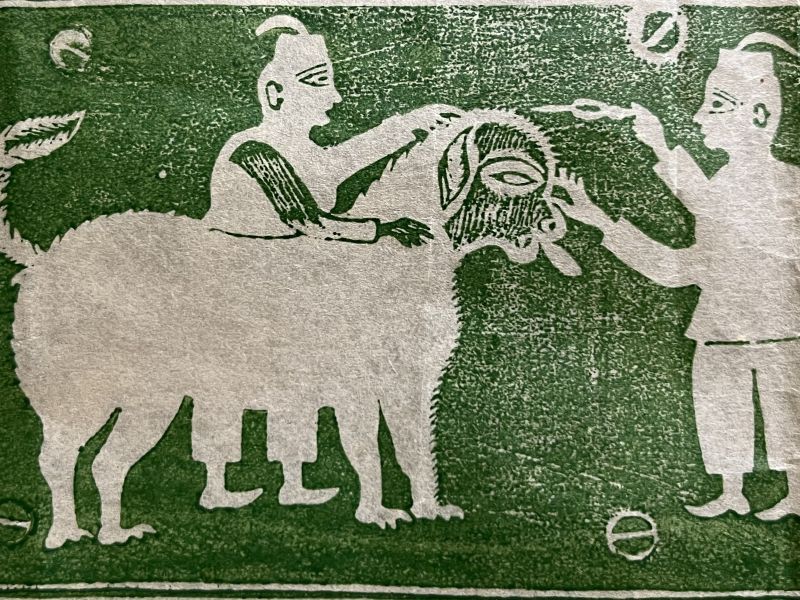
This illustration comes from a poster from the Indian state of Uttar Pradesh and dates from c.1912. The poster advertises the veterinary skills of two practitioners (known as Salutri) working in Meerut City. It is one of our favourite items in the whole collection.
The dog represented here belonged to Captain JW Alston of the 1st Royal Irish Rifles who were stationed nearby. She came to the Salutri with an irritation to the eye, which the Salutri soon dealt with.
Newfies
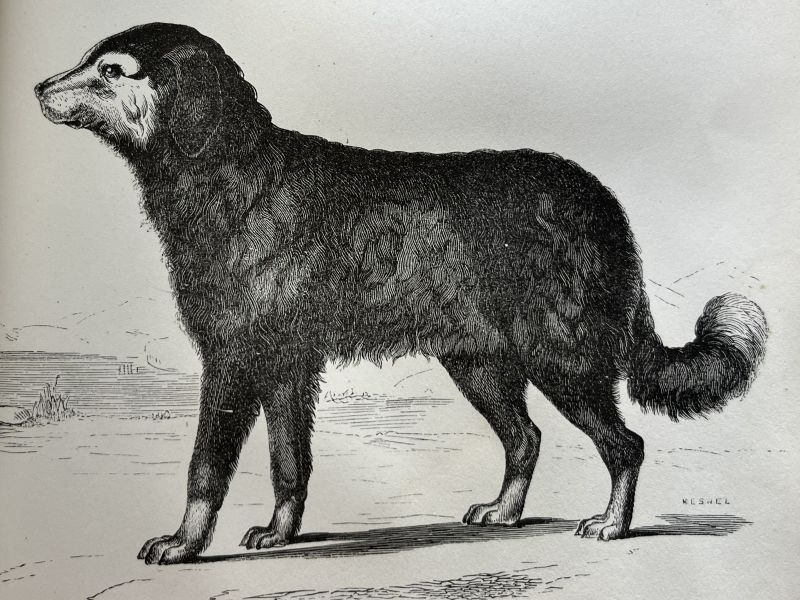
The Newfoundland originates on the Canadian island from which it takes its name, most likely as a combination of indigenous breeds meeting European dogs brought across the Atlantic by explorers from the fifteenth century onwards. Newfoundlands are strong swimmers with a history of bravery and devotion in lifesaving exploits.
This example comes from Le Chien by Eugene Gayot published in 1867. Gayot was a French author and animal expert, who published several books on horses, dogs and rabbits. He was a longtime member of the National Society of Agriculture and an honorary advisor of the Society of Farmers of France.
Library reference XXR 33501-1001
A tricoloured fox
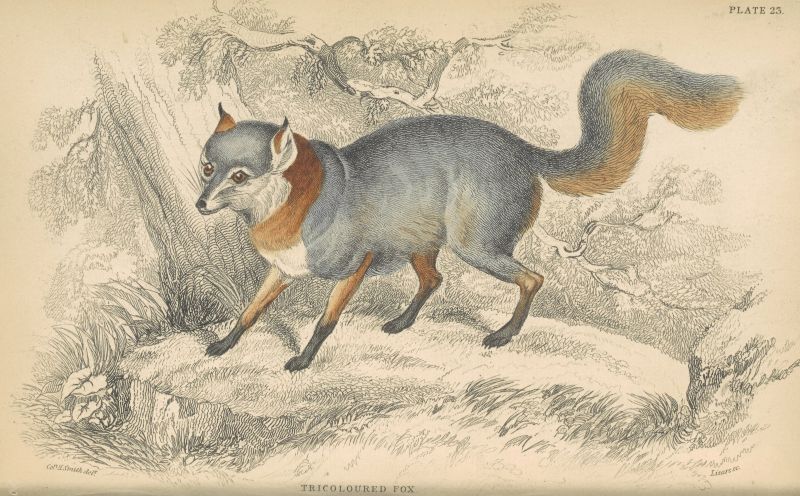
Between 1833 and 1866 William Jardine created and edited 40 volumes of The Naturalist’s Library covering Ornithology, Mammalia, Entomology, and Ichthyology. This striking image comes from Volume 20: Dogs, first published in 1840.
Jardine used his connections to recruit a team of experts to assist with the writing of various species. For his Dogs book Lieutenant-Colonel Charles Hamilton Smith provided his thoughts on wild dogs such as hyenas and Lycaon (such as the African wild dog), plus the various species of foxes, including this example of a tricoloured or cross fox. At the time he was writing the tricoloured fox was known in America and parts of Mexico.
Library reference: XXR 19345-1001
NARPAC
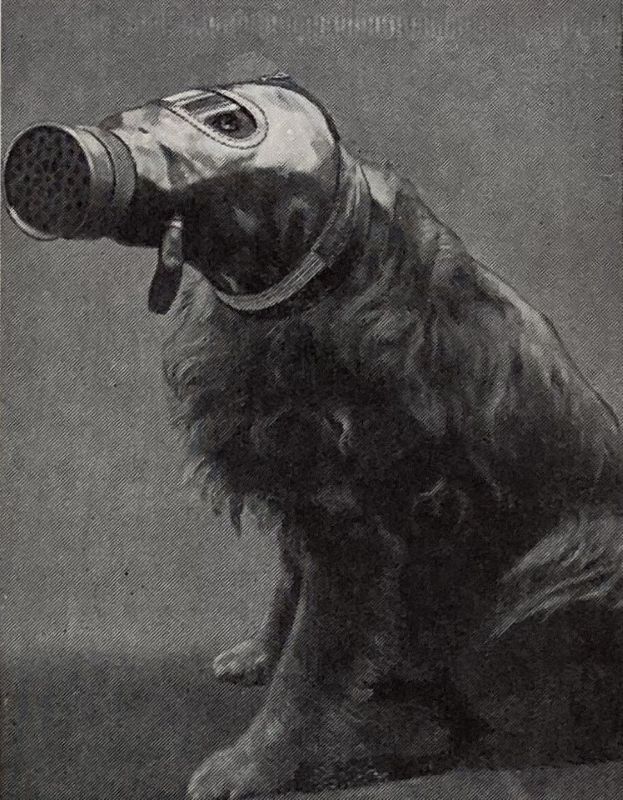
The National Air Raid Precautions for Animals Committee (NARPAC) was formed in the summer of 1939, one of a number of protection initiatives established by the Home Office at a time when war with Hitler’s Germany was becoming inevitable. Many animal welfare organisations were involved including the RSPCA, the PDSA and the RCVS.
NARPAC produced a public information booklet entitled Wartime Aids for All Animal Owners which provided guidance to animal owners on issues such as feeding pets when food becomes scarce and providing gas-proof accommodation for poultry.
The booklet considers “There are no suitable gas masks for animals”. However, that was soon to change as manufacturers began creating new animal safety products. This example is by the dogfood firm Spratt’s of Poplar. Dog gas masks were produced in a range of sizes suitable for different breeds.
Coming soon
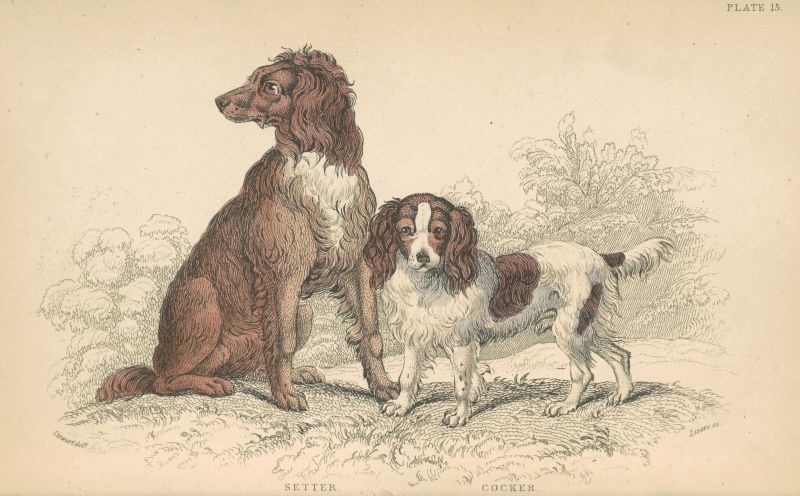
We shall very soon be making specially selected images from the archive and historic book collections available to buy via our print store.
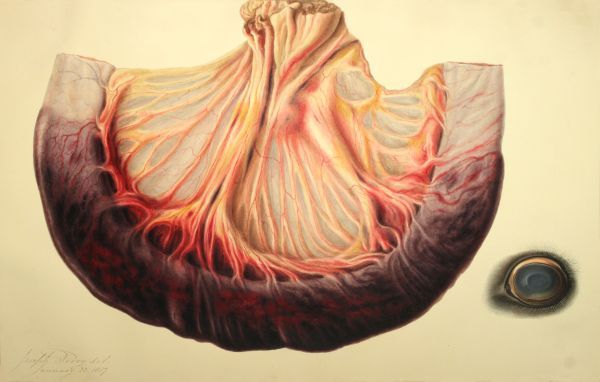
This will include beautiful and curious images of horses, birds, farm animals, anatomical studies, and, of course, dogs.
Watch this space.
Read more history blogs
-
History blog
 26 August 2026
International Dog Day 2026
-
History blog
-
History blog
 8 June 2026
Open Farm Sunday