History blog8 June 2026
The 7th of June marks this year’s Open Farms Sunday, when participating farms across Britain open their gates and show the public what the farming life is all about and how our food is produced. This year marks the twentieth anniversary of the first Open Farm Sunday events, so we’re celebrating with a few of our favourite farmyard chums from the College’s archive and library collections.
Pigs
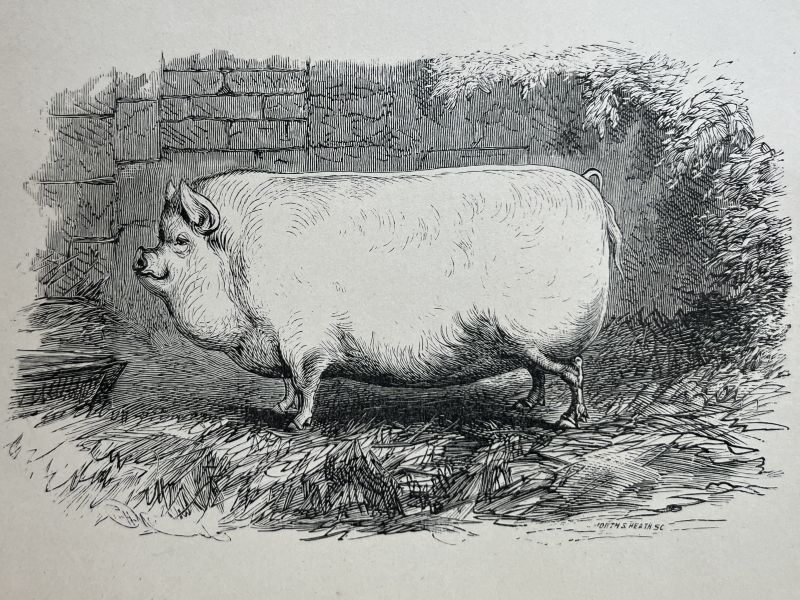
The Small White Yorkshire Pig was developed in the early Nineteenth Century (pre-1852) in Yorkshire, by crossing local stock with imported Chinese and Siamese pigs. It was a favourite breed of Prince Albert’s who between 1855 and 1860 won many show prizes for his pigs. This image comes from The Book of the Pig by James Long (1890).
Library reference: XXO
Ox
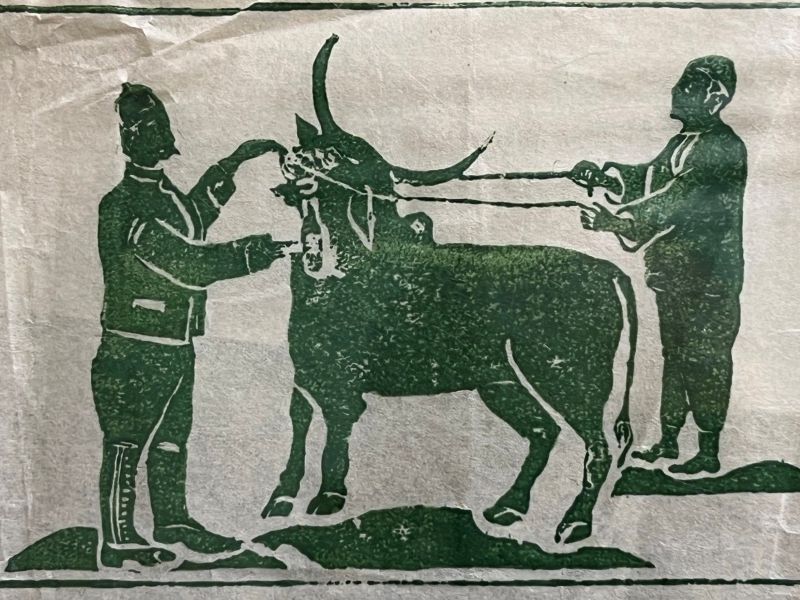
This illustration comes from a poster of c.1912 advertising the veterinary skills of two practitioners working in Meerut City in the Indian state of Uttar Pradesh. The poster features a range of written testimonials from satisfied customers, as well as forty-four illustrations depicting successful procedures. This ox belonged to the District Judge and was successfully treated for rheumatism.
Chickens
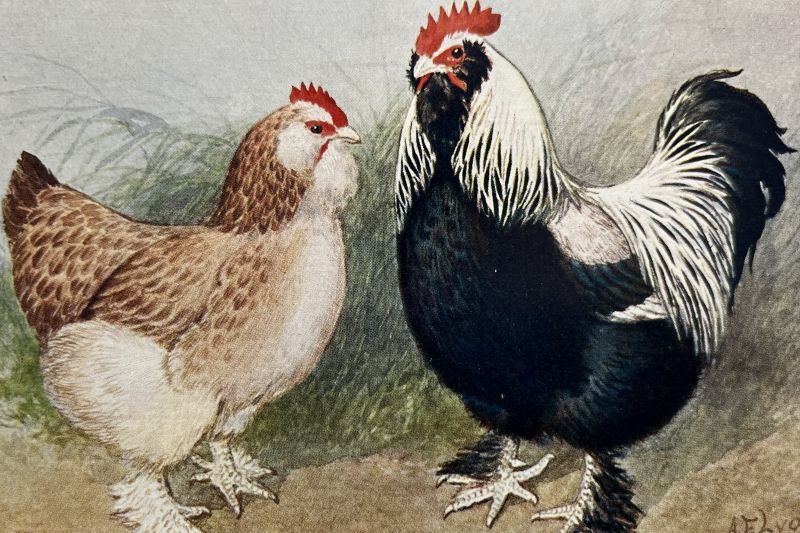
Faverolles chickens take their name from the village in Northern France, and were originally a cross between the large imported Asiatic fowls and the local Houdan breed. Faverolles are famed for their large size and feathered feet. The popularity of the breed spread to the UK in around 1896.
This image comes from The Poultry Manual by Rev TW Sturges (1909). In his introduction Sturges states that his book was written “…for all those who have a love of the quaint or beautiful, and who wish to add to that beauty or to perpetuate it.”
Library reference: XXUD
Horses
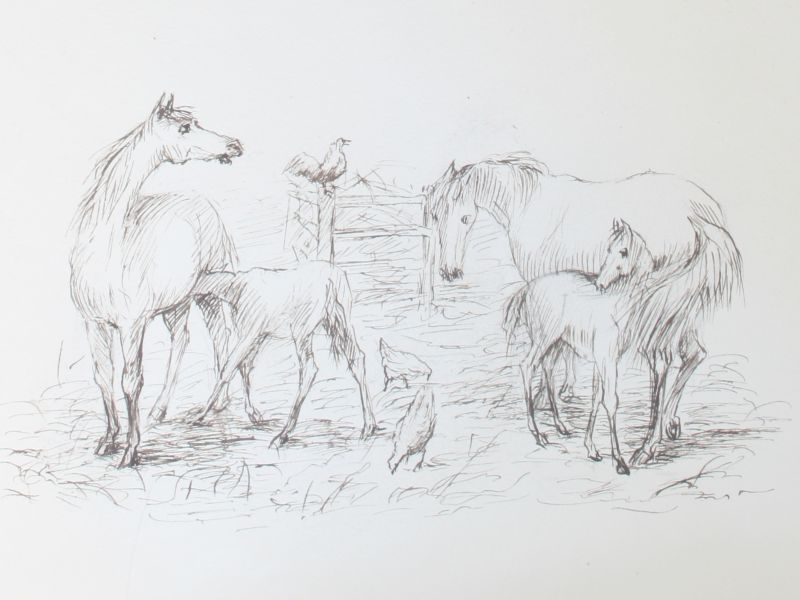
We are great admirers of the sketchbooks of John Roalfe Cox. In three of these books Cox drew various horses he’d encountered in practice, in preparation for his publication Horses in Accident and Disease (1868). In the fourth book (from which this image is taken) Cox drew a variety of rural scenes including some satirical sketches of riders falling foul of their horses while foxhunting.
Archive reference: JRC/4
Sheep
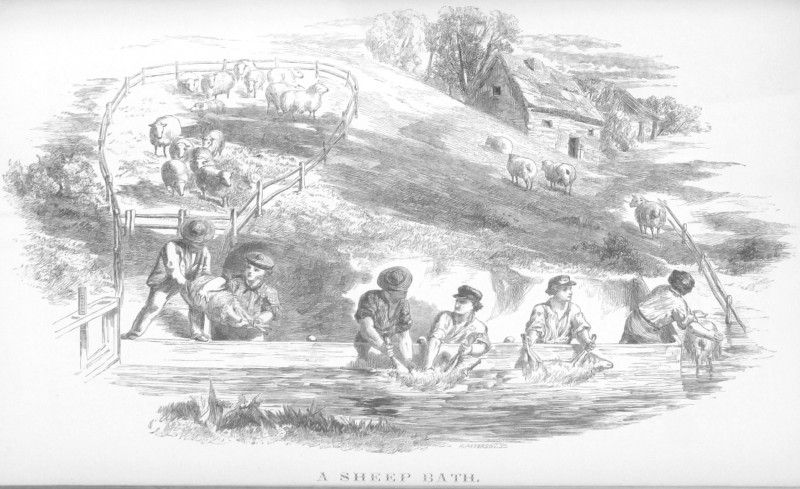
This sketch entitled A Sheep Bath comes from an article in the Edinburgh Veterinary Review of June 1862. It was drawn by John Gamgee, the then Principal of the New Veterinary College, Edinburgh, to accompany an article describing a specially constructed sheep bath he’d witness on a farm visit in Berwickshire. Gamgee describes the construction of a 21-foot-long conduit with a wooden sluice gate at the end to capture stream water. Gamgee was impressed with this technique of using natural water over chemical solutions.
Reference: EVR vol4 (25) CC pp. 366-368
Cows
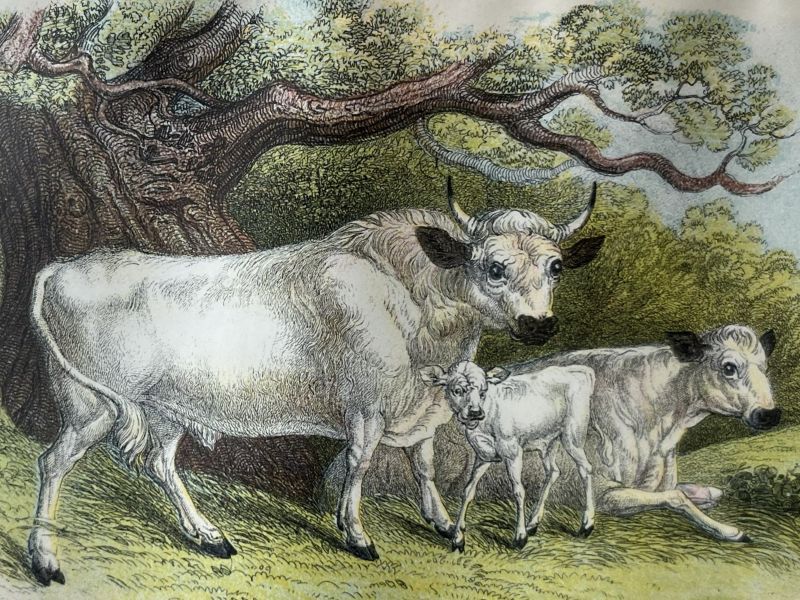
Richard Lydekker, in his A Handbook to the British Mammalia (1896) considered Chillingham Cattle to be the closest to the neolithic Aurochs, the now extinct ancestor to modern domestic cattle. Documentary evidence suggests that the distinct Chillingham herd was known to exist in Chillingham Park, Northumberland by at least 1645, though its equally possible that when in 1344 King Edward III gave permission for Chillingham Castle to have it’s deer park enclosed it was done to ensure this wild breed was domesticated for food and hunting.
Library reference: BLT
Read more history blogs
-
History blog
 26 August 2026
International Dog Day 2026
-
History blog
-
History blog
8 June 2026
Open Farm Sunday