History blog4 February 2026
February 17 marks Lunar New Year’s Day and 2026 is the Year of the Fire Horse. In the Chinese zodiac the horse is associated with adventure, success and optimism. So let’s enjoy a quick canter through some of our favourite horse images from the RCVS Historic Collections.
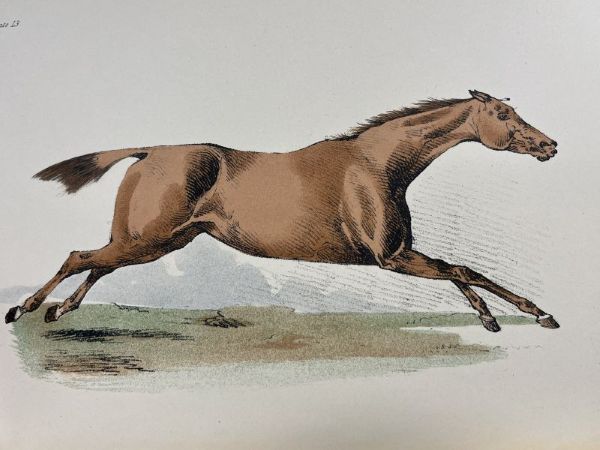
This action image comes from The Beauties and Defects in the Figure of the Horse Comparatively Delineated by Henry Alken, first published in 1816. Alken’s book provides illustrated analysis of horse anatomy aimed at inexperienced horse purchasers. In his introduction Alken writes “There is no animal whose countenance combines such correct and powerful expressions of character”.
Alken (1785-1851) was predominantly a caricaturist and illustrator of sporting subjects. For his more satirical works he used the pseudonym Ben Tally Ho.
Library reference: XXM 19105-1001
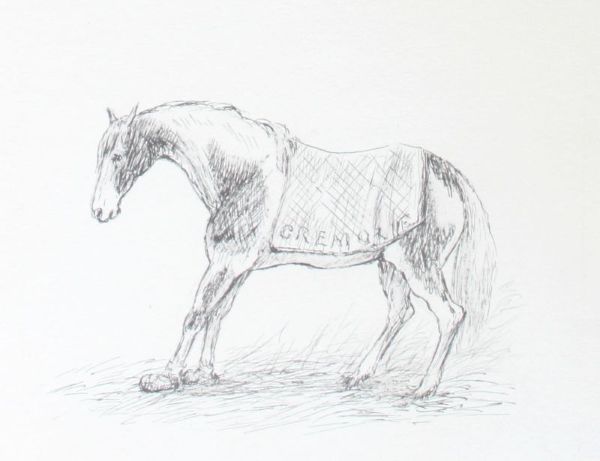
John Roalfe Cox (died 1903) had a lucrative practice near Grosvenor Square, London, and served on the RCVS Council, becoming President for 1885/6. He also studied medicine and became a member of the Royal College of Surgeons.
The RCVS Archive houses four sketchbooks made by Cox during his veterinary career. His observations were later published as Horses in Accident and Disease in 1892. One of his notebooks contains sketches of rural life and satirical hunting scenes.
Archive reference: JRC/1-4
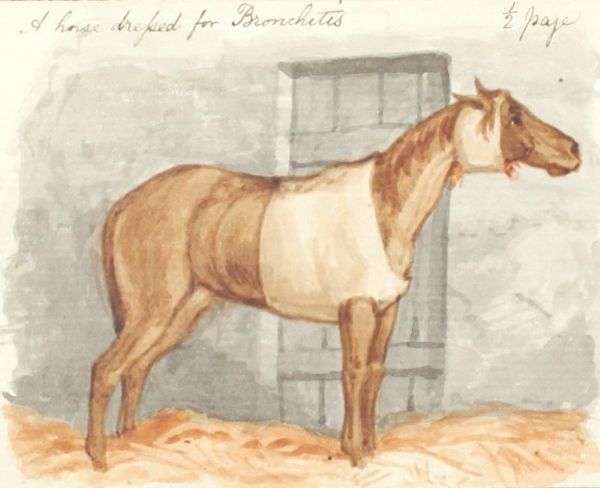
Edward Mayhew (1808-1868) first achieved success as a theatre producer and as a Fine Arts journalist. He turned to the veterinary profession in his early 30s, graduating in 1845.
The RCVS Archive includes Mayhew’s original sketches for his works The Illustrated Horse Doctor (1860) and Illustrated Horse Management (1864). The latter publication features designs for an improved form of stables illustrated by his architect brother Julius. This image is titled A Horse Dressed for Bronchitis and comes from a chapter focusing on The Chest and its Contents.
Archive reference: EM/1-3
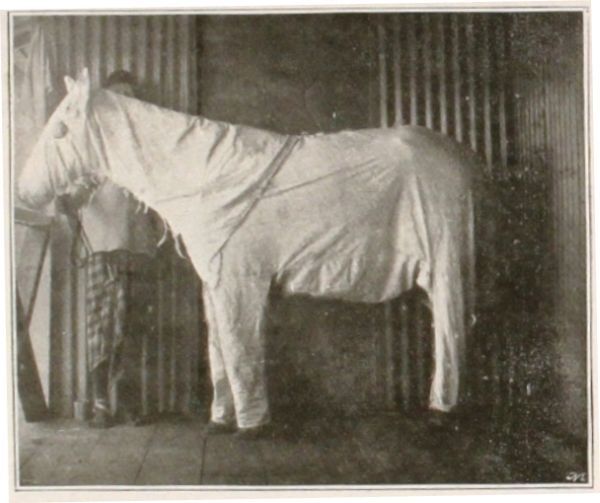
Robert Stordy (1872-1943) spent many years working in the veterinary service of the British Army in Africa. In 1898 he made a 400-mile journey from Nairobi to Kampala, the first made by the newly established Uganda Transport system, set up to supply equipment to troops serving in Uganda.
Stordy kept a journal along the route, recording details of the scenery, people and animals encountered along the way. This image shows a horse seemingly wearing pyjamas, as a precaution against tsetse fly.
Archive reference: RS/1
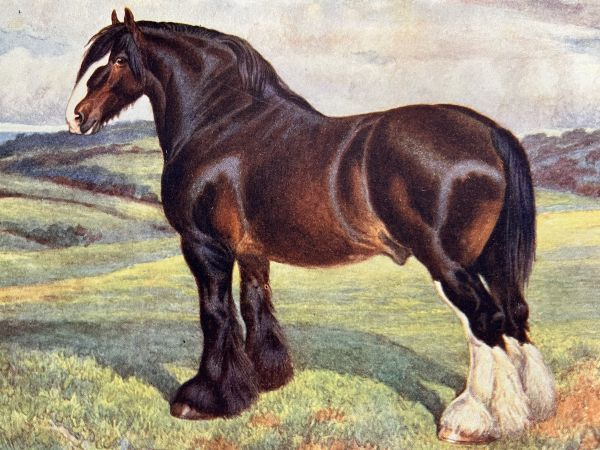
This is Harold, a shire stallion, painted by Frank Babbage. It’s one of a number of illustrations found in The Horse It’s Treatment in Health and Disease by Professor J Wortley Axe, published in 1906. The book lists the prime defects commonly occurring in horses and provides an overview of different horse breeds.
The book contains many diagrams, photographs and artworks featuring prizewinning horses such as Harold. He was owned by Alfred C Duncombe of Calwich Abbey, Derbyshire. Wortley Axe also wrote veterinary books on cattle including Can Tuberculosis be Stamped Out? in 1897.
Library reference: XXM 14537-1001
Read more history blogs
-
History blog
 26 August 2026
International Dog Day 2026
-
History blog
-
History blog
 8 June 2026
Open Farm Sunday