Case example14 July 2026
RCVS Knowledge Award winner reflects on successful audit of dogs with acute haemorrhagic diarrhoea syndrome (AHDS)
Vets Now
Vets Now were named champion of the Quality Improvement to Lead Organisational Change category in the 2026 RCVS Knowledge Awards. The team audited the monitoring of canine patients with acute haemorrhagic diarrhoea syndrome (AHDS) and discovered that 8.7% of fluid therapy calculations had been accurately recorded. After introducing new guidelines, the amount of accurate calculations recorded increased to 40%, while fluid therapy related complications and the use of antibiotics without justification decreased.
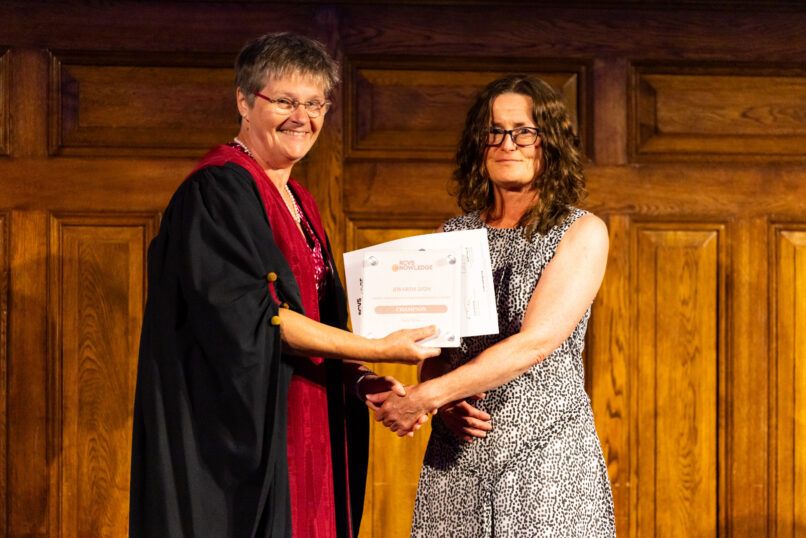
We spoke to veterinary surgeon Lucy Leicester about the project and her team’s award win.
How does it feel to be named a 2026 RCVS Knowledge Award Champion?
It’s a real honour, but more than anything, it’s been incredibly rewarding to see the hard work of so many colleagues recognised. This project involved over 40 colleagues across our emergency clinics, so the award reflects a genuinely collaborative effort.
For me, one of the most satisfying aspects has been seeing how a relatively simple quality improvement (QI) approach can lead to meaningful changes in day-to-day clinical practice. It’s a reminder that small improvements, implemented consistently, can have a significant impact.
Tell us about your project and the highlights from it
Our project focused on improving the documentation of fluid therapy calculations in dogs presenting with acute haemorrhagic diarrhoea syndrome (AHDS).
Accurate fluid therapy is an important part of managing these patients, but we identified variation in how calculations were being recorded. Using QI methodology we worked with teams across the organisation to understand the barriers, test potential solutions and monitor progress over time.
One of the biggest highlights was the level of engagement from colleagues around the UK. The project demonstrated that when frontline teams are involved in identifying problems and designing solutions, meaningful change is possible at scale.
We saw substantial improvements in documentation rates during the project, but perhaps more importantly we established a framework that can be applied to future QI initiatives.
What does winning an RCVS Knowledge Award mean to your team?
I think it’s a wonderful recognition of the effort, enthusiasm and commitment that everyone involved brought to the project. QI work often happens alongside busy clinical roles, so it can take a lot of dedication to collect data, test changes and keep momentum going.
This award acknowledges that contribution and highlights the value of creating time and space for improvement work within veterinary practice. I hope everyone involved feels proud of what we achieved together. The award belongs to the whole team.
What would you say to other vet teams about the RCVS Knowledge Awards?
I’d encourage any team that’s working to improve patient care, team wellbeing or clinical processes to consider entering. You don’t need a large research project or a perfect outcome. Some of the most valuable QI work starts with a simple question about how things could work better.
The awards are a great opportunity to share experiences, learn from others and celebrate the efforts of teams who are committed to continuous improvement. Even the process of reflecting on and documenting what you’ve learnt can be hugely valuable.
Inspired by Lucy’s work? Applications for the RCVS Knowledge Quality Improvement Awards 2027 just opened. You can apply here.