History blog1 July 2026
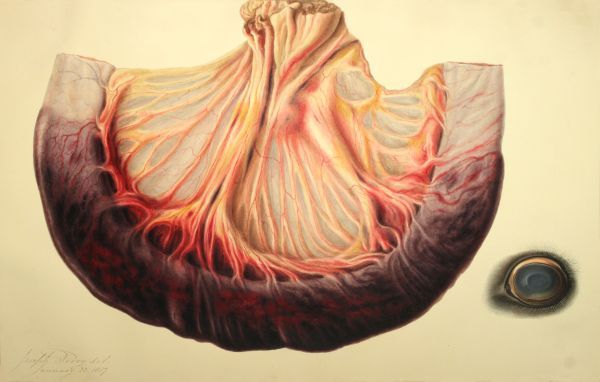
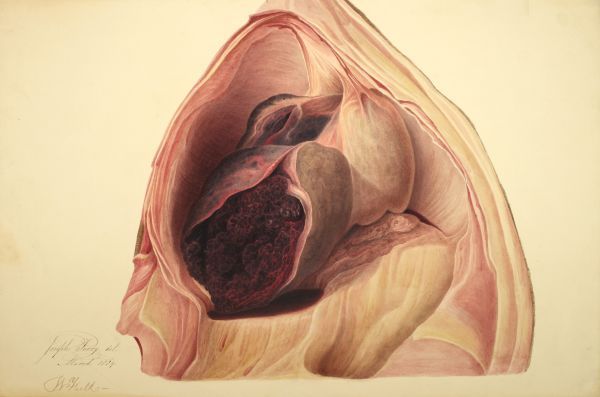
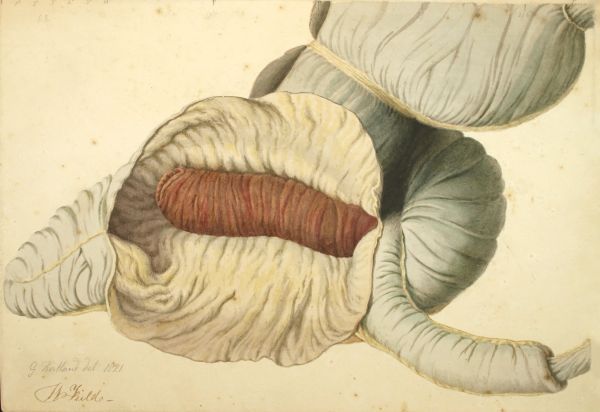
These striking artworks may look like otherworldly landscapes or creatures from the bottom of the sea, but in truth they are illustrations of disease or damage to limbs and organs, mainly in horses. We know that many date from the 1820s and 1830s. They were most likely created to illustrate a publication (as yet unidentified) or as teaching aids.
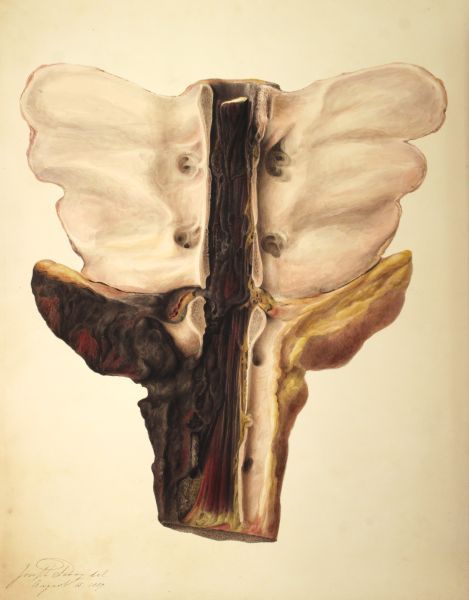
Some are the work of Joseph Perry, an engraver who also created illustrations on human anatomical subjects. Others are signed G Kirtland. One of Kirtland’s trade cards survive in the archives of the British Museum. On it Kirtland describes himself as “Drawing Master and Engraver” of 264 Holborn, London.
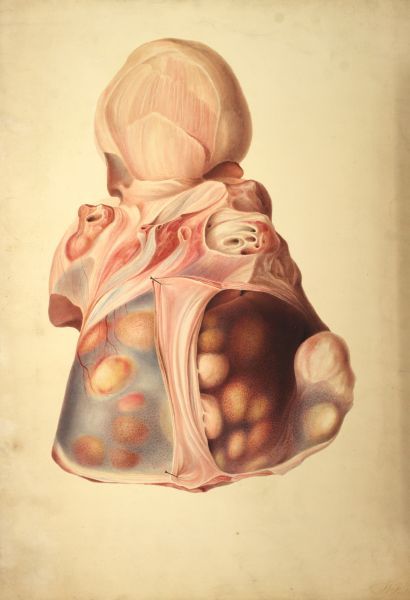
Twenty-one of the paintings are signed by W Field in addition to the name of the artist and it’s assumed these were given to the RCVS by former president William Field (in office 1854-6), as part of a larger donation of items to the Library and Museum made in 1877.
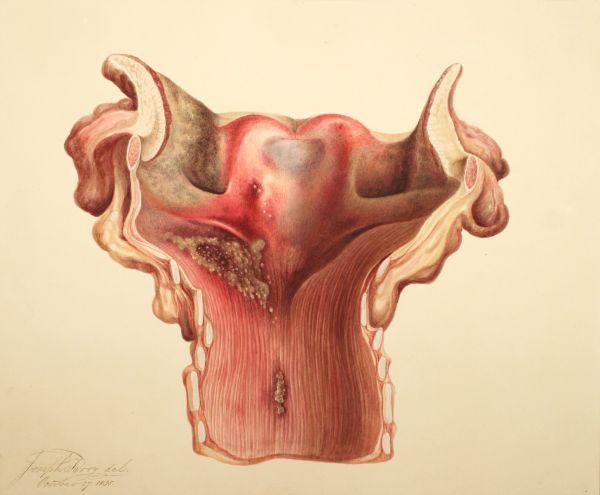
None of this helps us to identify exactly what we’re looking at. Can you assist? Can anybody throw any light as to what these images depict? If so we’d love to hear from you via archives@rcvsknowledge.org
Read more history blogs
-
Insight